Why Choose the Right Milking Parlour Equipment?
Choosing the right milking parlour equipment is not merely a purchasing decision. It shapes cow comfort, milking speed, udder health, labour demands, and daily farm performance. A modern parlour may look impressive, yet unsuitable equipment can create uneven vacuum, longer attachment times, or stressful cow movement. The details matter. A slipping liner matters.
Dr. Trevor DeVries, a respected dairy cattle management researcher, has stated, “Milking equipment should support cow comfort, udder health, and consistent routines.” This principle gives farmers a practical starting point. The best system must match herd size, stall layout, labour availability, cleaning routines, and future expansion plans. It should also provide clear records, stable vacuum performance, and easy access for maintenance. Stainless-steel surfaces, readable gauges, smooth cow flow, and properly sized clusters are not decorative features. They influence every milking shift.
Experience still exposes uncomfortable truths. More automation does not always mean better results. A sophisticated system can underperform when staff lack training or maintenance is delayed. I have seen how a small seal problem can disturb an entire morning’s workflow. That is why equipment selection needs evidence, not excitement. Farmers should compare real operating data, supplier support, replacement-part availability, and feedback from farms with similar conditions. The right milking parlour equipment should make good routines easier, not hide weak ones. A perfect system may not exist. A dependable, well-matched one can still transform the parlour.
What Is Milking Parlour Equipment?
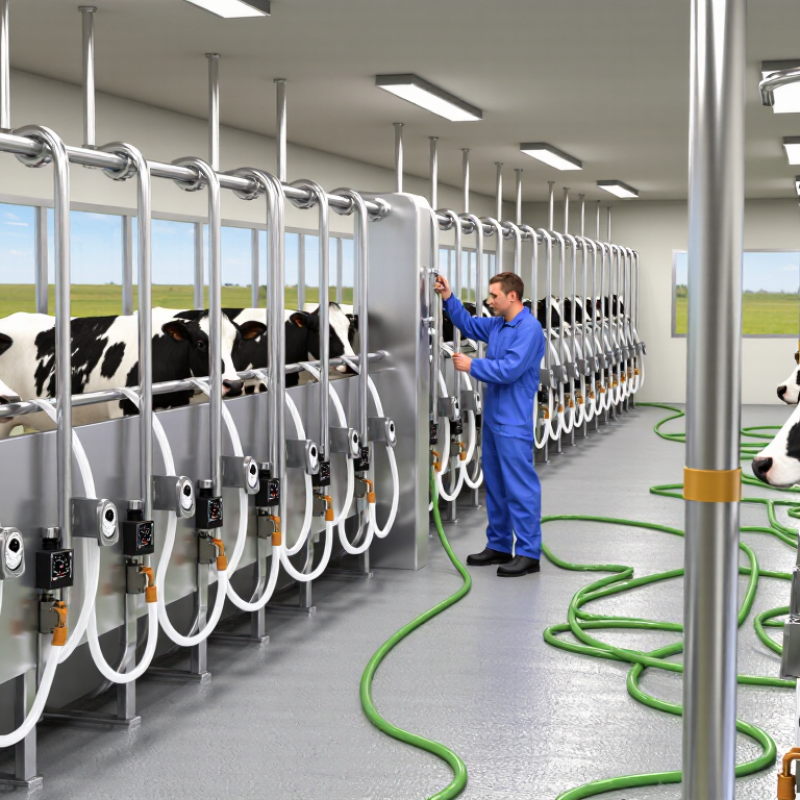
Milking parlour equipment is the working system used to remove milk hygienically, quickly, and gently. It includes the parlour structure, milking clusters, liners, vacuum pumps, pulsators, milk meters, filters, and wash equipment. Bulk milk cooling also matters, although it may sit outside the parlour itself. Each part affects milk quality and cow comfort.
A correct vacuum level supports stable milking. Pulsation helps the teat recover between milk extraction cycles. Poorly maintained liners can increase slipping, air admission, and contamination risks. The National Mastitis Council reports that clinical mastitis commonly affects about 20 to 40 cows per 100 cows annually. Parlour equipment cannot prevent every case, but correct cleaning and milking routines can reduce avoidable pressure. Small faults become expensive.
The International Organization for Standardization provides technical requirements for milking-machine performance through ISO 5707. These requirements cover air flow, vacuum stability, and system capacity. In practice, equipment selection should match herd size, milking frequency, labor, and future expansion. A large system is not automatically better. It may create longer cleaning cycles and higher maintenance demands. I have seen efficient-looking parlours fail because operators could not inspect every rubber part easily. That weakness deserves attention. Good equipment should show measurable performance, allow simple daily checks, and protect cows from rough handling. Reports offer useful benchmarks, but the farm’s actual routine still decides the result.
Which Features Improve Cow Comfort and Milk Quality?
Why Choose the Right Milking Parlour Equipment?
Which Features Improve Cow Comfort and Milk Quality?
A well-designed milking parlour should make cows move calmly and naturally. Non-slip flooring reduces falls, especially near wet entry points. Wide turns prevent animals from crowding or hesitating. Comfortable stalls keep cows standing evenly during milking. Good lighting helps staff notice swollen udders, dirty teats, or unusual movement.
Stable vacuum levels and correctly matched pulsation protect teat condition. The milking units should attach smoothly without pulling or twisting. Lightweight clusters can reduce strain on both cows and operators. Automatic cluster removal may limit overmilking, but it still needs regular checking. Small faults matter.
Cleanability directly affects milk quality. Smooth surfaces, accessible pipes, and effective drainage help remove organic residue. A reliable washing cycle needs the correct temperature, contact time, and chemical concentration. Staff should verify these details rather than trust a display alone. A missed film inside one joint can support bacterial growth.
Ventilation keeps the parlour cooler and reduces moisture around udders. Teat preparation areas should provide clean water, disposable towels, and enough working space. In daily practice, observation remains essential: cows slipping, kicking, or waiting too long may reveal design problems. No equipment removes every source of stress. One blocked drain or poorly adjusted unit can weaken an otherwise sound system. Records, routine maintenance, and advice from qualified dairy technicians support safer decisions.
How Should Farms Compare Equipment Types and Costs?
Why Choose the Right Milking Parlour Equipment?
How Should Farms Compare Equipment Types and Costs?
A practical comparison starts with herd size, milking frequency, labour availability, and future expansion. Start with traffic. Herringbone parlours usually offer clear cow flow and straightforward operator access. Parallel parlours can reduce walking distance around larger herds. Rotary systems may provide steady movement, but they demand higher capital investment and careful maintenance planning. Swing-over systems can suit smaller farms with limited budgets, although milking speed may become restrictive as herd numbers grow.
Purchase price is only one part of the calculation. Farms should compare installation work, building alterations, electrical requirements, water use, cleaning time, spare parts, and service access. Labour costs can change the result quickly. A system that saves one worker each shift may justify a larger initial investment. Cash flow matters. Financing terms and expected replacement dates should be reviewed with an agricultural accountant, not guessed from a supplier quotation.
Cow comfort and milk quality also deserve measurable attention. Ask technicians about vacuum stability, liner replacement intervals, wash temperatures, and routine testing. Speak with farms operating similar systems in similar conditions. Their comments often reveal practical problems that brochures omit. A careful trial can prevent expensive disappointment. That assumption can fail. Some farms choose the fastest system, then discover that training, cleaning, or repairs disrupt daily routines. The best comparison may be a simple spreadsheet covering ten years, with realistic labour, maintenance, energy, and expansion costs. Recheck the figures after a month of actual milking.
What Maintenance and Safety Factors Matter Most?
Why Choose the Right Milking Parlour Equipment?
Reliable milking equipment protects animal welfare, milk quality, and worker safety. Maintenance begins after every milking session. Rinse pipelines promptly, clean teat cups, and inspect rubber liners for cracks or swelling. Small defects can harbor bacteria or alter milking performance.
Check vacuum levels, pulsator timing, air leaks, and milk flow regularly. A quiet pump is not always a healthy pump. Listen for unusual vibration, record readings, and compare them with the manufacturer’s technical requirements. Qualified technicians should test electrical systems and replace worn components. Improvised repairs may save minutes, but they can create serious hazards.
Keep floors dry and remove spilled milk immediately. Use guarded moving parts and clearly marked emergency stops. Workers need practical training, not only a signed form. Lock out power before servicing pumps, gates, or control panels. Store tools away from animals and walking paths. A checklist helps, but it can become routine paperwork. Review it after near misses, equipment changes, or seasonal workload increases. No system is perfect. Careful observation still matters.
Why Choose the Right Milking Parlour Equipment?
Maintenance and safety priorities should be built into equipment selection from the beginning. The chart below shows a practical planning baseline for common inspection and service intervals in a milking parlour.
Key point: Daily cleaning and visual safety checks protect milk hygiene and operator safety, while weekly and monthly inspections help identify vacuum, pulsation, electrical, and structural problems before they cause downtime or injury. Always confirm intervals with the equipment manual and applicable local regulations.