

Choosing a Metal Pill Container supplier involves more than comparing prices. Buyers need dependable materials, consistent dimensions, secure closures, and clear communication. A small tin may look simple. Its finish, hinge, and lid fit still affect daily use.
This guide introduces ten suppliers serving international buyers. It offers a practical starting point, not a certification list or endorsement. Supplier capabilities can change, and product ranges may differ by order size, customization needs, and destination. Check current specifications directly.
Details matter. Ask for material descriptions, measurements, surface-finish options, sample availability, and production timelines. If branding is important, request a physical sample to assess printing, color, and edge quality under ordinary light. A photograph can miss scratches or a loose-fitting lid. That is worth remembering.
Experience also means asking less glamorous questions. What is the minimum order quantity? How are defects handled? Can the supplier provide consistent batches? Responses help reveal whether a vendor understands your requirements, but polished answers alone are not proof. Compare written specifications with samples and purchase terms before making a decision.
The suppliers in this overview are considered from a global buyer’s perspective, including product focus, customization, and accessibility of information. Not every supplier will suit every project. One may offer broader design choices; another may be a better fit for straightforward packaging. Use the comparison to identify candidates, then verify the details that matter to your product and customers. A little extra checking can prevent a surprisingly large mismatch.
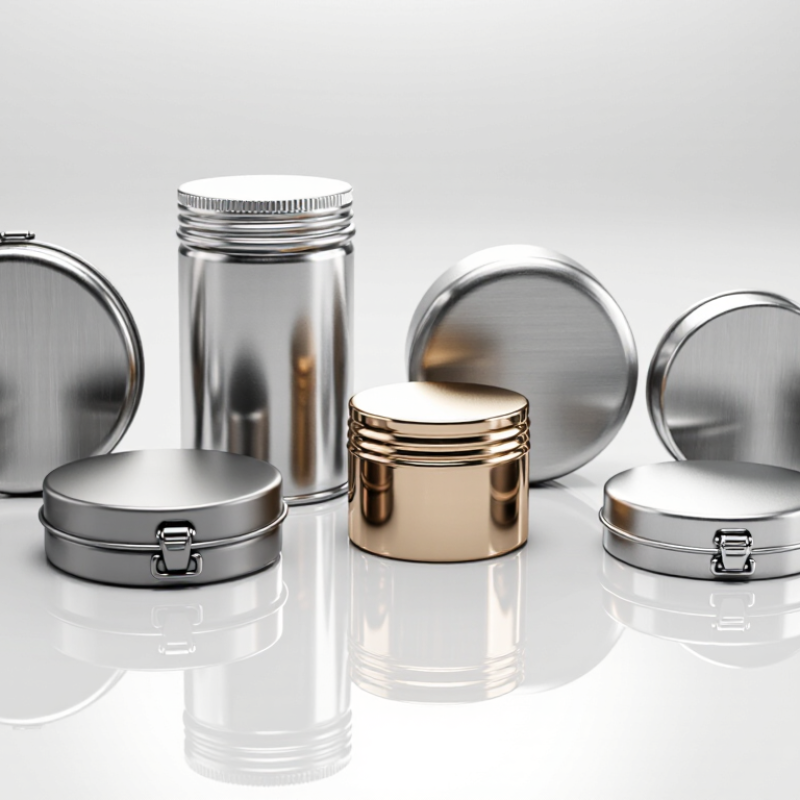
Metal pill containers are compact cases made from materials such as aluminum, stainless steel, or coated tin. They hold a small number of tablets or capsules for daily routines, travel, or short outings. Common designs include screw-top tins, hinged boxes, and pocket cases with separate compartments. A smooth rim and secure closure matter: loose pills can spill when a container shifts inside a bag.
People often use these containers to carry a limited supply rather than store medicine long term. For example, someone might place a few scheduled doses in a clean, dry case before leaving home. However, medicines may need their original packaging for important instructions, identification, or storage conditions. A metal case is not automatically airtight, moisture-proof, or suitable for every tablet. Check the product details, and follow the medicine’s storage directions.
For buyers comparing suppliers, inspect the interior finish, closure strength, compartment size, and labeling options. Ask how the metal is protected from corrosion, especially if the case may be handled with damp hands. Small details count. A lid that feels secure in a sample may loosen after repeated use; testing that assumption is worthwhile. Metal cases can be durable and reusable, but they still need regular cleaning and a fully dry interior before refilling.
When comparing metal pill container suppliers, look beyond polished product photos. Request a physical sample and inspect the lid, inner rim, and seams. Does it close smoothly without wobbling? A cap that feels secure in a showroom may loosen after repeated opening. Ask how the supplier checks fit and finish across a production run, not just on selected samples.
Material and coating details matter. Request written specifications for the metal, lining, and exterior finish, especially if the container will hold tablets directly. Ask for relevant safety and quality documents, and confirm they match the product being quoted. Good answers should be specific. Vague claims are a warning sign. So is a sample that differs from the agreed specification.
Check practical capacity, dimensions, and labeling area against your actual packaging needs. Then discuss minimum order quantities, production lead times, and how defects are handled. A low unit price can become costly if dents appear in transit or replacement stock takes weeks. Request photos of packed cartons and ask what inspection happens before dispatch. Small details count. Still, a checklist cannot reveal everything; supplier communication may improve, or falter, once an order is underway. Keep written records of agreed tolerances and sample changes, even when the conversation feels straightforward.
Choosing among the top 10 metal pill container suppliers for global buyers starts with checking how products perform in daily use. A container should close securely, open without excessive force, and resist dents during ordinary handling. Ask suppliers for material specifications, dimensions, finish details, and samples before placing a large order. A sample can reveal rough seams or a lid that loosens after repeated use. Small details matter.
Reliable suppliers should also explain their quality checks and production capacity clearly. Request recent inspection records, packaging details, and lead times for both samples and bulk orders. If containers will be printed or customized, confirm artwork requirements and ask how color consistency is monitored. Good communication helps, but it is not proof of quality. Verify claims.
Global buyers should compare more than unit price. Freight, protective packaging, minimum order quantities, and replacement terms can change the true cost. Ask how containers are packed to prevent scratches, especially when finishes are polished. Also clarify which documents accompany each shipment. Some answers may remain vague; that is a reason to pause and request specifics. A careful supplier comparison takes time, but it can prevent costly surprises.
Global buyers should compare metal pill container suppliers by more than unit price. The Grand View Research report estimates the global metal packaging market reached USD 142.8 billion in 2023, with projected growth through 2030. This broad market figure is not specific to pill containers, but it signals strong competition and varied manufacturing capacity. Ask suppliers for production-site details, typical lead times, and documented quality controls. A polished sample is useful. A repeatable process matters more.
Customization can include container dimensions, closure fit, liner materials, surface finish, and printed markings. Request physical samples and test them with the intended contents and packaging line. Check whether the supplier can maintain tolerances across repeat orders, not just a small pilot run. Small details matter. A lid that loosens in transit can undermine an otherwise sound design. Custom tooling may also increase cost and delay delivery; suppliers should explain these trade-offs in writing.
Compliance evidence deserves close review. Ask for material declarations, coating specifications, traceability records, and relevant test reports for the destination market. ISO 9001 certification can indicate a quality-management system, but it does not prove that a specific container meets every product or market requirement. Verify certificates with the issuing body and confirm that documents match the actual manufacturing site. Some buyers accept paperwork too quickly. That is a risk. A capable supplier should answer technical questions clearly and flag limitations before production.
| Profile | Typical Manufacturing Base | Common Container Formats | Customization Options | Typical Order Fit | Compliance and Documentation to Confirm | Buyer Considerations |
|---|---|---|---|---|---|---|
| 1. High-volume tinplate packaging producer | Established metal-packaging regions in Asia, Europe, and North America | Round tins, slip-lid boxes, hinged-lid tins | Printed artwork, embossing, color finishes, standard-size variations | Large repeat orders using established tooling | Material specifications, coatings and ink declarations, food-contact documentation where applicable, quality-system records | Confirm minimum order quantity, tooling ownership, print proof approval, and production lead time. |
| 2. Small-batch custom tin fabricator | Regional packaging and metalworking clusters | Compact pocket tins, sample tins, small round containers | Digital or limited-run printing, labels, custom inserts, selected shape options | Prototype, launch, and lower-volume programs | Written material and coating declarations; request test reports relevant to the intended use | Small runs may carry higher unit costs; verify whether decoration is direct print or applied label. |
| 3. Aluminum container specialist | Aluminum-forming and consumer-packaging manufacturing centers | Lightweight screw-top cans, small drawn containers, aluminum cases | Surface finishing, color, lid styles, logos, dimensional options | Buyers prioritizing low weight or a metallic appearance | Alloy and coating specifications, applicable chemical or migration testing, traceability documents | Check dent resistance, closure fit, lining compatibility, and performance in the intended environment. |
| 4. Stainless-steel precision fabricator | Industrial metal-forming regions with precision machining capacity | Reusable pill cases, pocket capsules, screw-cap containers | Laser marking, polished or brushed finishes, custom dimensions | Durable, reusable products and specialist applications | Steel grade and surface-finish declarations; confirm any product-specific safety requirements | Usually a higher-cost option; assess weight, machining tolerances, and closure sealing. |
| 5. Child-resistant closure and packaging supplier | Specialist packaging hubs serving regulated-product markets | Metal containers paired with child-resistant closure systems | Closure styles, tamper-evident features, labeling, container dimensions | Products for markets where child-resistant packaging rules may apply | Request test evidence for the exact assembled package and verify the applicable market regulation | Do not assume a closure is compliant based on appearance; testing must match the final package configuration. |
| 6. Printed promotional tin supplier | Consumer-goods and promotional-packaging production regions | Decorative round tins, small gift tins, branded pocket containers | Full-color graphics, special finishes, seasonal artwork, gift sets | Promotional campaigns and retail presentation | Ink and coating declarations, artwork approvals, packaging material data | Confirm color tolerance, scratch resistance, and whether the product is suitable for direct contact with contents. |
| 7. Metal container supplier with insert assembly | Packaging assemblers with access to plastics, foam, or molded inserts | Tins with dividers, pill organizers, protective inner trays | Insert layout, compartment count, cushioning, labeling | Multi-compartment or presentation-oriented designs | Material declarations for every component; verify compatibility and intended-use requirements | Review the complete assembly, not just the metal shell, for fit, cleanliness, and durability. |
| 8. Contract packaging and assembly provider | Packaging centers with filling, labeling, and assembly operations | Metal containers supplied with labels, seals, or assembled components | Filling coordination, labeling, kitting, lot coding | Buyers seeking a broader packaging service | Facility quality records, process controls, traceability, and applicable product-handling documentation | Clarify responsibility for product filling, release testing, labeling accuracy, and finished-goods inspection. |
| 9. Export-oriented packaging manufacturer | Manufacturing regions with established international freight networks | Standard tins and custom-printed metal containers for export | Artwork adaptation, export cartons, language-specific labels | Buyers shipping across multiple markets | Country-of-origin and material documents, export paperwork, destination-market requirements | Confirm Incoterms, carton specifications, shipping protection, and import requirements before ordering. |
| 10. Specialty low-impact packaging supplier | Metal-packaging producers offering recycled-content or reduced-material options | Lightweight tins, reusable containers, recyclable metal formats | Reduced-gauge designs, simplified decoration, reusable-format options | Programs with documented sustainability objectives | Substantiation for recycled-content claims, material composition, and relevant environmental declarations | Ask for evidence behind environmental claims and assess recyclability in the destination market. |
Important: This is a comparison of common supplier profiles, not a verified ranking of named companies. Capabilities, minimum order quantities, certifications, and regulatory suitability vary by manufacturer and product. Confirm current documents and test evidence for the exact container, coating, closure, and destination market before purchase.
When comparing metal pill container suppliers, check more than unit price. Ask for material specifications, wall thickness, closure fit, coating details, and test reports for corrosion and transit damage. Request samples from the same production process used for your order. A lid that feels secure on a sample may loosen after repeated opening.
Quality systems matter. ISO 15378 sets requirements for primary packaging materials used by medicinal product manufacturers, combining quality management with relevant good manufacturing practices. Ask whether the supplier’s certification scope covers the specific factory and product, then verify it with current documents. For metal packaging sustainability, APEAL reported an 80.5% recycling rate for steel packaging in Europe in 2022. That regional figure is useful context, not a guarantee that every container is recyclable in your market.
Compare suppliers on minimum order quantities, tooling costs, lead times, and the consistency of repeat orders. Ask how they control dimensions and inspect printing, seams, and coating coverage. Request a written defect policy and a clear plan for delayed shipments. A low quote can still be costly. I would also check how quickly the supplier answers technical questions; it is a practical signal, though not a perfect one. Keep the evaluation grounded in evidence: dated test results, factory audit records, and samples you can inspect under normal handling.