
Top 10 Types of Milking Equipment for Global Buyers

Buying milking equipment is a practical decision, not a simple product search. Global dairy buyers must balance herd size, labor skills, milk volume, hygiene, energy use, and after-sales support. The right system should fit the farm’s daily rhythm, from a small bucket milker to an automated rotary parlour.

Livestock-handling expert Dr. Temple Grandin has said, “If you want animals to move, you have to make it easy for them.” Her point also applies to milking equipment. Smooth cow movement, calm entry areas, comfortable positioning, and short waiting times can influence both animal welfare and milking efficiency. A noisy pump or poorly placed cluster can create stress. Small details matter.

This guide examines ten common types of milking equipment for international buyers. It considers portable machines, pipeline systems, herringbone parlours, parallel parlours, rotary platforms, robotic units, and other farm-scale solutions. Each option has strengths, limitations, and different maintenance demands. Buyers should check vacuum stability, pulsation control, cleaning performance, spare-part access, electrical compatibility, and technician availability before ordering.

The cheapest quotation may not be the cheapest system.

A low purchase price can become expensive when seals, liners, or control boards are difficult to replace. Product brochures also leave out uncomfortable details. Installation quality, water temperature, operator training, and local service often decide real performance. This overview offers a useful starting point, but no ranking can replace a farm-specific assessment. Conditions vary. Mistakes happen. Good purchasing decisions leave room for review, testing, and improvement.
Top 10 Types of Milking Equipment for Global Buyers

Milking Equipment: Purpose, Scope, and Essential Terminology

Milking equipment is designed to remove milk safely, consistently, and with minimal animal stress. For global buyers, its purpose extends beyond the milking unit. The complete scope includes teat cups, liners, pulsators, vacuum pumps, milk meters, pipelines, filters, cooling tanks, and cleaning systems. Each part affects hygiene, labor, milk quality, and operating cost.

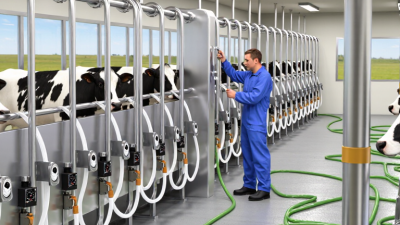
Common equipment types include bucket milking machines, pipeline systems, portable units, parlor systems, rotary platforms, and automated milking stations. A teat cup connects to the udder. The liner provides the massage action. The pulsator controls opening and closing cycles. Vacuum stability matters greatly. Excessive vacuum may damage teat tissue, while weak vacuum can reduce milking performance. These terms should appear clearly in supplier specifications.

Buyers should also understand CIP, meaning clean-in-place, and bulk tank capacity. CIP systems circulate water and approved cleaning solutions through internal surfaces. A bulk tank cools milk rapidly after collection. Check its volume, cooling time, electrical requirements, and spare-part access. On farms I have observed, poor pipe drainage created more hygiene trouble than the main machine. That detail is easy to miss. I still think equipment comparisons often focus too much on speed. Animal fit, operator training, maintenance records, and local service capacity deserve equal attention. A practical trial with real operators can reveal problems that a brochure hides.

Top 10 Types of Milking Equipment for Global Buyers

Indicative milking capacity by equipment type. Actual throughput depends on herd size, milking-unit configuration, operator workflow, animal flow, and automation level.

Capacity is shown as an indicative number of cows milked per hour under typical commercial operating conditions.

Ten Major Types of Milking Equipment Explained

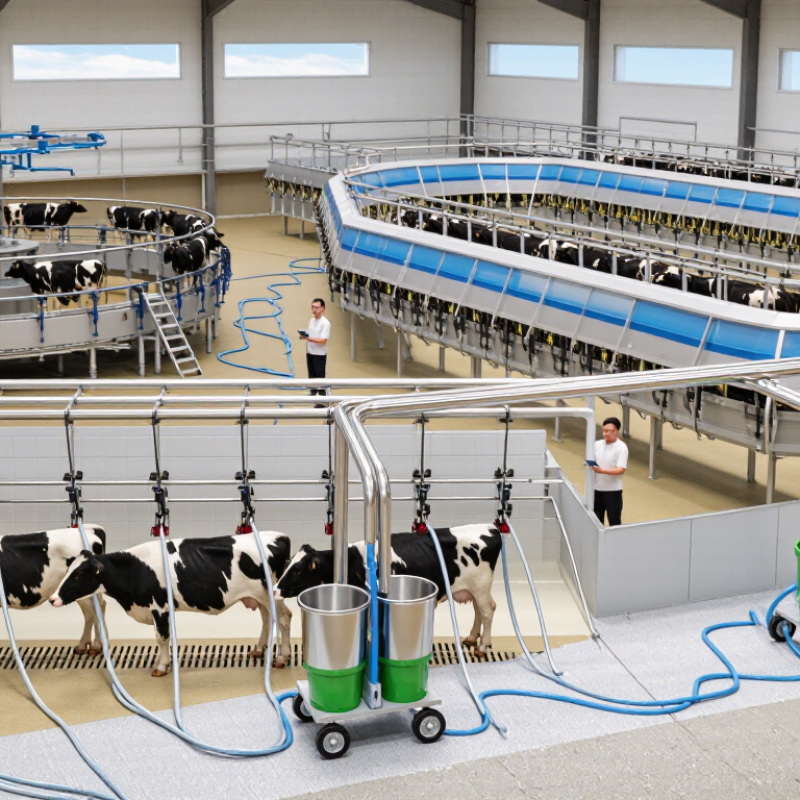
Small farms often begin with bucket milking equipment. It collects milk beside the animal and suits limited herds. Portable milking units add wheels, a vacuum pump, and flexible hoses for different stalls. Can milking systems use a sealed container, reducing handling during collection. Pipeline milking equipment moves milk directly to a cooling tank. It saves carrying time, but poor pipe cleaning creates serious hygiene risks. Milking parlors organize animals in a dedicated area. Herringbone parlors position cows diagonally, while parallel parlors place them side by side. Both layouts support faster preparation and easier observation. Correct vacuum stability matters more than impressive capacity.

Tandem parlors place each animal in an individual stall. They allow careful attention to udder health and uneven milking speeds. Rotary parlors carry animals around a rotating platform, helping large operations maintain steady movement. Robotic milking systems identify animals, attach teat cups, and record yield data automatically. Mobile milking equipment serves grazing herds and temporary sites, although uneven ground can complicate operation. Automated cluster removers stop milking when flow declines, protecting teats from unnecessary vacuum exposure. Staff still need to check liners, pulsation, cooling temperature, and sanitation records. Technology reduces routine labor. It does not replace judgment. In practice, buyers sometimes choose oversized systems, then discover that cleaning time, water supply, and operator training were underestimated.

How Milking Technologies Differ in Operation and Farm Use

Top 10 Types of Milking Equipment for Global Buyers

Milking equipment differs by workflow, labor demand, and cow movement. That distinction matters more than appearance. FAOSTAT reported roughly 930 million tonnes of global milk production in 2022. Large output requires adaptable systems, not identical machines.

Ten common categories include bucket, direct-to-can, pipeline, herringbone, parallel, tandem, rotary, mobile, robotic, and automated batch systems. Bucket units suit small herds and remote sheds. They are simple, but cleaning every container takes time. Pipeline systems reduce carrying work and support better hygiene routines. Herringbone parlors offer clear udder access. Parallel parlors can increase throughput when space is limited. Tandem stalls allow individual cow movement. Rotary platforms keep cows moving continuously. Mobile units help seasonal or grazing farms. Robotic systems support voluntary milking and flexible labor schedules. Automated batch systems combine sensors with scheduled group milking.

The 2024 IFCN Dairy Report highlights wide differences in farm scale, labor costs, and productivity across regions. A rotary platform may perform well on a high-throughput farm, yet waste capital on a small herd. Robotic milking can reduce fixed milking schedules, but it demands reliable power, data monitoring, and trained maintenance. ISO 5707:2023 emphasizes vacuum stability, airflow, and equipment design. These details affect teat condition and milk quality. A cheaper system is not always economical. That lesson is easy to miss. Global buyers should compare cleaning time, spare-part access, operator skill, and expansion capacity before choosing.

Key Performance, Hygiene, and Automation Considerations

Top 10 Types of Milking Equipment for Global Buyers

Key Performance, Hygiene, and Automation Considerations

Choosing among bucket milking units, portable systems, pipeline milking equipment, parlors, and robotic systems requires more than comparing output figures. Buyers should examine vacuum stability, pulsation accuracy, milk transfer speed, and energy consumption. A stable vacuum protects teat condition and supports consistent milking. Small fluctuations can increase stress and slow the session. Ask suppliers for measured performance data under working conditions, not only laboratory results.

Hygiene starts with equipment design. Smooth stainless-steel surfaces, short milk lines, accessible joints, and effective drainage reduce residue buildup. Automated cleaning can control water temperature, detergent circulation, and rinse duration. However, automation cannot fix poor installation or neglected filters. It still needs trained operators. Check whether cleaning records, alarms, and replacement parts are easy to manage across different regions. Local water hardness may also affect cleaning results.

Automation should match farm size, labor skills, and service availability. Robotic systems can record yield, conductivity, attachment time, and animal traffic. Advanced data is useful. Yet excessive complexity can create downtime when technical support is distant. I have seen buyers focus on impressive software while overlooking manual backup procedures. That is a costly weakness. A practical evaluation includes a live milking trial, sanitation inspection, noise measurement, and operator feedback. The best equipment is not always the most automated.

Global Buying Criteria for Farms of Different Sizes

Global buyers should size milking equipment around herd growth, labor, utilities, and milk collection requirements. The International Dairy Federation’s World Dairy Situation 2024 estimated global milk production exceeded 950 million tonnes in 2023. That scale hides sharp differences between farms. Small farms need simplicity. A two- to four-cow bucket milker can reduce hand-milking time, while mobile units suit scattered sheds. Buyers should check pulsation control, stainless-steel contact surfaces, washable hoses, and local spare-part access. FAO guidance links hygienic milking and rapid cooling with safer, higher-value milk. Yet a low purchase price can conceal costly cleaning and downtime.

Medium farms usually need pipeline systems or compact parlours as daily volume and walking distance increase. A practical target is steady throughput, not the largest advertised capacity. Larger farms may choose herringbone, parallel, rotary, automated, or robotic systems. These systems require stable electricity, trained technicians, backup procedures, and reliable wash water. The OECD-FAO Agricultural Outlook 2024-2033 expects continued global dairy expansion. Its outlook places annual production growth near 1.6 percent. Capacity planning should include future animals, not only today’s yield. Energy, water, and labor costs should be modeled together. One weakness in many buying plans is optimistic utilization. Equipment may look efficient on paper, yet poor cow flow, uneven vacuum, or weak maintenance can erase the advantage. Ask suppliers for measured throughput, cleaning cycles, noise data, and service response times. Pilot testing remains wiser than trusting a brochure.

Top 10 Types of Milking Equipment for Global Buyers - Global Buying Criteria for Farms of Different Sizes

No. Equipment Type Typical Farm Size Indicative Throughput Labor Requirement Automation Level Relative Investment Key Global Buying Criteria Best-Fit Application
1 Bucket Milking Machine 1–30 cows Approximately 5–20 cows/hour High; cows are connected and disconnected individually Basic Low Vacuum stability, food-grade bucket material, pulsator quality, spare-part availability, voltage compatibility, and ease of cleaning Smallholder farms, start-up dairy units, and facilities without permanent milking infrastructure
2 Portable Trolley Milker 10–60 cows Approximately 10–30 cows/hour High to medium; equipment is moved between cows or groups Basic to intermediate Low to medium Wheel durability, hose length, pump capacity, trolley maneuverability, washability, local electrical standards, and service support Farms needing flexibility, temporary milking areas, or gradual expansion from manual milking
3 Pipeline Milking System 30–150 cows Approximately 20–60 cows/hour Medium; milking units connect to a fixed milk line Intermediate Medium Pipeline diameter, vacuum reserve, receiver jar capacity, automatic cleaning, installation layout, drainability, and milk-cooling integration Permanent dairy buildings requiring cleaner milk transfer and reduced bucket handling
4 Swing-Over Parlour 40–200 cows Approximately 30–80 cows/hour Medium; one set of milking units serves both sides Intermediate Medium Number of stalls, cow-flow design, swing-over arm strength, operator visibility, vacuum performance, cleaning automation, and upgrade options Medium-sized farms seeking efficient use of equipment and a compact parlour footprint
5 Herringbone Parlour 60–300 cows Approximately 60–120 cows/hour Medium; operators work from the rear of angled cows Intermediate to advanced Medium to high Stall capacity, cow entry and exit speed, operator ergonomics, cluster placement, automatic cluster removal, and cleaning cycle control Commercial farms needing reliable batch milking and good access to each cow
6 Parallel Parlour 100–500 cows Approximately 80–200 cows/hour Medium; cows stand perpendicular to the operator pit Advanced High Throughput per stall, rapid-exit design, automatic detachers, identification systems, pit safety, cooling capacity, and wastewater handling Large herds where high throughput and efficient cow movement are priorities
7 Rotary Parlour 250–1,000+ cows Approximately 150–400 cows/hour Medium to low per cow; requires trained supervisory staff Advanced to highly automated Very high Platform diameter, stall count, loading efficiency, rotary drive reliability, automatic detachment, data connectivity, backup power, and maintenance access High-volume dairy operations with consistent cow flow and sufficient capital for specialized infrastructure
8 Batch Milking System 80–400 cows Approximately 40–120 cows/hour Medium; groups are milked in scheduled batches Intermediate to advanced Medium to high Number of milking units, group size, vacuum pump reserve, batch changeover time, wash-routine capacity, and compatibility with existing barns Farms that prefer scheduled group management and want to increase capacity without installing a rotary platform
9 Automatic Milking Robot 50–70 cows per unit Typically 2–3 milkings per cow per day, depending on cow traffic and settings Low routine milking labor; higher monitoring and technical-management requirements Highly automated Very high Reliable sensors, udder preparation, cleaning verification, remote alerts, software support, backup procedures, electrical stability, and technician availability Farms targeting flexible milking times, detailed herd data, and reduced repetitive milking labor
10 Mobile Milking Parlour 20–150 cows Approximately 20–60 cows/hour Medium to high; setup and relocation require additional work Basic to intermediate Medium Transportability, frame strength, water and power requirements, milk cooling, cleaning logistics, road access, weather protection, and local regulatory compliance Pasture-based farms, leased land, seasonal operations, and sites without a permanent parlour building
Note: Throughput figures are indicative planning ranges, not guaranteed capacities. Actual performance depends on the number of milking units, cow preparation time, operator skill, animal flow, vacuum-system design, cleaning procedures, and local installation conditions.